


Recovering From a Motor Vehicle Accident: A Guide

Last Updated: November 21, 2026
Quick Summary
Recovering from a motor vehicle accident starts with same-day evaluation, even if you feel fine, because soft tissue injuries often do not produce noticeable symptoms right away. Follow up with structured care that restores motion and strength, and tell your care team about persistent symptoms early.
Check yourself at the scene: neck range of motion, shoulder shrug, deep breath, sensation in fingers and toes.
Call the police and ask for a report number to anchor insurance and medical claims.
Seek emergency care for loss of consciousness, confusion, severe headache, vomiting, numbness, blurred vision, or breathing difficulty.
Cold therapy in the first 48 to 72 hours and relative rest, not complete immobility, are standard first-line measures.
If a symptom has not improved in two to four weeks, or has worsened, say so directly at your next visit.
Hurt after a crash and not sure what to do?
We evaluate whiplash and spine trauma after car accidents and build a recovery plan for you.
Table of Contents
What to Do After a Car Accident for Your Body
Recovering from a motor vehicle accident starts with the first hour, not the first appointment. Many people who feel fine at the scene develop pain days later, which is why early evaluation matters. (Source: National Institute of Neurological Disorders and Stroke)

Here is a general sequence of steps that many people find helpful after a collision.
Check yourself before you check the bumper. Run through a slow self-assessment: neck range of motion, shoulder shrug, deep breath, sensation in fingers and toes. If anything feels wrong, stop and call 911.
Move vehicles out of traffic only if the vehicles are drivable and nobody is hurt. Standing in a live lane is how minor crashes become fatal ones.
Call the police and ask for a report number. That document anchors every insurance and medical claim that follows.
Exchange information with the other driver: name, insurance carrier, policy number, plate, and contact details.
Take pictures of vehicle damage, road conditions, and any visible injury before anything is moved or treated.
Get evaluated the same day, even if you feel steady. Soft tissue injuries often do not produce noticeable symptoms right away.
That last step is the one people skip, and it is the one that matters most for your body.
Here is the general sequence of steps the article recommends after a collision.
Step | What to do |
1 | Check yourself: neck range of motion, shoulder shrug, deep breath, sensation |
2 | Move vehicles out of traffic only if drivable and nobody is hurt |
3 | Call the police and ask for a report number |
4 | Exchange name, insurance carrier, policy number, plate, contact details |
5 | Take pictures of damage, road conditions, and visible injury |
6 | Get evaluated the same day, even if you feel steady |
Car Accident Trauma Symptoms You Should Not Ignore
Some symptoms after a car crash are normal soreness. Others are red flags that need urgent medical attention, and the difference is not always obvious to the person experiencing them. Seek emergency care immediately for loss of consciousness, confusion, severe or worsening headache, vomiting, numbness or weakness in the arms or legs, blurred vision, or difficulty breathing.
Beyond those, watch for the delayed symptoms that define most whiplash and soft tissue cases:
Neck stiffness that worsens over several days
Pain radiating into the shoulder, arm, or between the shoulder blades
Lower back pain or a feeling that the spine cannot bear weight comfortably
Headaches that start at the base of the skull
Dizziness, ringing in the ears, or difficulty concentrating
Numbness or tingling in the hands
A common mistake is assuming a normal X-ray rules out injury. Plain imaging shows bone alignment, not ligament strain, disc injury, or muscle dysfunction. Our guide to neck pain days after a car accident walks through what to do next.
How Long Does It Take to Recover From a Car Accident?
There is no single recovery clock after a motor vehicle accident, but there are recognizable phases.
Minor soft tissue injuries (no fracture, no nerve involvement). These are the strains, sprains, and uncomplicated whiplash cases that make up a large share of crash injuries.
Moderate injuries (disc involvement, nerve irritation, multiple spinal levels). These cases often take longer to settle, and recovery timelines differ from person to person. A clinician can explain what to expect for a specific injury.
Serious injuries (fracture, surgery, traumatic brain injury, significant neurological deficit). Recovery here is measured in months to years and is directed by the treating physicians and specialists.
That range is wide because recovery is not one process. An expert-consensus study led by researcher EJ Smits and colleagues (2022) identified resilience, coping skills, recovery expectations, pre-existing physical and mental health, and workplace factors as influences on recovery after road traffic injury (pubmed.ncbi.nlm.nih.gov).
Watch out: treating a published range as a deadline can push people to stop care too early or, conversely, to fear that something is wrong when they are simply on the slower end of normal. For a detailed week-by-week breakdown of the most common crash injury, see our guide on how long whiplash recovery takes. (Source: National Highway Traffic Safety Administration)
Physical Recovery: Pain Management, Rest, and Rehabilitation
Physical recovery is the process of restoring normal motion, strength, and load tolerance to injured tissue, and it rarely happens through rest alone. Early care focuses on controlling inflammation and protecting the injured area.
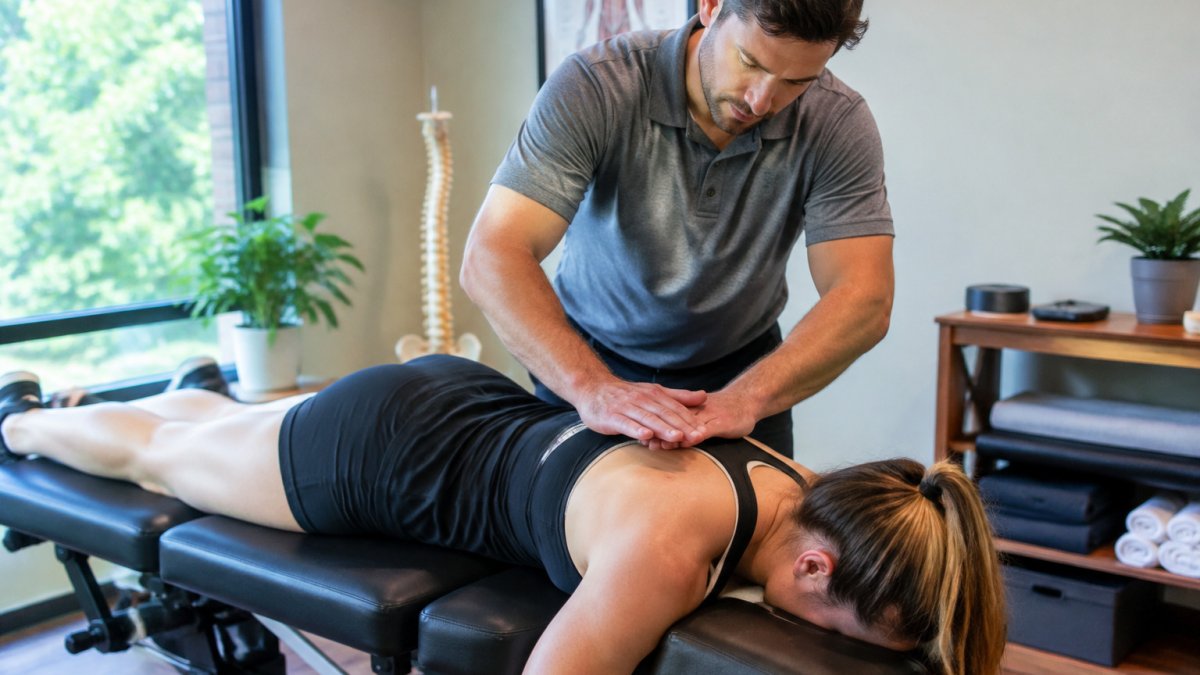
From there, the work shifts. Gentle neck exercises, controlled stretching, heat therapy before activity, and progressive strengthening rebuild function. Our team's breakdown of the 7 steps in a chiropractic treatment plan for recovery shows what that structure looks like in practice.
Watch out: prolonged bed rest is the most common self-inflicted setback we see. Tissue that is not moved loses tolerance, and stiffness compounds into chronic pain.
Mental and Emotional Recovery After a Crash
Emotional recovery after a motor vehicle accident is a real clinical concern, not a character issue. Fear of driving, intrusive thoughts about the crash, irritability, disrupted sleep, and a loss of confidence behind the wheel are common and treatable. Evidence-based support includes cognitive behavioral therapy, graded exposure to driving situations, and, where symptoms persist, evaluation by a licensed mental health professional.
Some research on recovery after road traffic injury places mental health among the factors that can shape physical recovery, so anxiety may affect more than mood. Tell your care team about sleep problems and driving avoidance early.
Follow-Up Care and Your Car Accident Checklist PDF
Follow-up care is where most recoveries quietly stall. Patients feel better, stop attending appointments, and then wonder why symptoms return when they lift a suitcase or sit through a long workday. A structured follow-up schedule catches biomechanical problems before they become chronic.
Coordinating your care team. Most crash recoveries involve more than one provider. A typical arrangement includes a primary care physician who oversees the big picture, a chiropractor or physical therapist who handles musculoskeletal rehabilitation, and, when symptoms warrant, a specialist such as an orthopedist, neurologist, or pain management physician.
Talking about persistent symptoms. If a symptom has not improved in two to four weeks, or has worsened, say so directly at your next visit rather than waiting for the provider to ask. Useful phrasing includes what the symptom prevents you from doing, what makes it better or worse, and how it has changed since the last visit. Providers can act on specifics; "it still hurts" is harder to work with than "I cannot turn my head to back out of the driveway, and it is worse in the morning."
Practical support for daily activities. Recovery is not only clinic appointments. Plan for the following:
Driving: Confirm with your provider when it is safe to drive, especially if you have neck stiffness that limits shoulder checking, dizziness, or sedating medication. A short test drive in a quiet area is reasonable once cleared.
Work: Ask for written work restrictions, lifting limits, sitting tolerance, and breaks, and share them with your employer. Many people benefit from a phased return rather than jumping back to full duties.
Sleep: Neck support and positioning matter in the first weeks. A supportive pillow and sleeping on your back or side rather than on your stomach can reduce morning stiffness.
Household tasks: Delegate lifting, bending, and repetitive chores during the early phase. Overdoing it on a good day is a common cause of a bad week.
Caregiving: If you care for children or others, arrange backup help early rather than waiting for a flare-up.
Use this checklist to keep your own recovery organized:
Police report number and responding agency
Insurance claim number and adjuster contact
Photos of vehicle damage and visible injuries
Same-day medical evaluation record
List of all providers seen, with dates
Symptom log: what hurts, when, and what makes it worse
Work restriction notes from your treating provider
Follow-up appointment dates scheduled in advance
Question list for each appointment
Before you schedule follow-up care, confirm which plans the clinic works with. You can review the insurances accepted at our practice to plan ahead.
Requesting an Appointment for Your Recovery
The single most useful thing you can do after a crash is get a qualified evaluation before symptoms settle into a pattern.
Bialecki Chiropractic is led by a board-certified chiropractor with advanced certification in Whiplash Biomechanics & Injury Traumatology and a Doctor of Chiropractic from New York Chiropractic College.
If you are unsure whether your symptoms warrant care, that uncertainty is itself a reason to request an appointment and let a clinician assess you.
A crash that leaves you sore, stiff, and anxious is not something to wait out.
Frequently Asked Questions
How long does it take to mentally recover from a car crash?
There is no single timeline. An expert-consensus study by Smits and colleagues (2022) found that recovery after a road traffic injury depends on resilience, coping skills, recovery expectations, prior physical and mental health, and workplace factors. Some people feel back to normal within weeks, while others notice fear of driving or lingering anxiety for months. If stress, sleep problems, or driving anxiety persist, tell your doctor or a licensed mental health professional. Recovery is not a uniform process with one expected course.
What are common car accident trauma symptoms I should watch for?
Car accident trauma symptoms can appear hours or days after the crash. Watch for neck and shoulder stiffness, headaches, back pain, numbness or tingling in the arms or legs, dizziness, and unusual fatigue. Emotional signs include anxiety, irritability, trouble sleeping, and fear of driving. Some injuries, including whiplash and soft tissue damage, often do not show up on standard X-rays. If symptoms are severe, worsening, or include weakness or loss of consciousness, seek urgent medical care.
How long does it take to recover from a car accident?
Recovery time varies by injury severity. Mild soft tissue injuries often improve over a period of weeks with rest and gentle activity. More serious injuries, including herniated discs or fractures, can take considerably longer, and some people manage lingering symptoms for an extended time. The Smits et al. (2022) consensus study notes that recovery is influenced by many individual factors, so your timeline may differ. A clinician can assess your specific injuries and give you a realistic estimate.
What should I do for my body after a car accident?
First, check for injuries and call the police if anyone is hurt. Move vehicles out of traffic if it is safe, exchange information, and take pictures of the scene and damage. See a doctor promptly, even if you feel fine, because delayed symptoms are common. For mild to moderate pain, rest, cold therapy in the first 48 hours, and gentle stretching can help. Follow your doctor's advice on medication and physical therapy, and keep a written record of symptoms for follow-up care.
When should I seek medical care after a car accident?
Seek emergency care for severe pain, numbness or weakness, confusion, loss of consciousness, vision changes, or difficulty breathing. For milder symptoms, see a doctor within a few days, especially if neck or back pain develops. A car accident checklist PDF can help you track symptoms and appointments. If imaging looks normal but pain persists, ask about a biomechanical evaluation, since whiplash and soft tissue injuries often do not appear on standard X-rays.
Can physical therapy help after a car accident?
Physical therapy is often part of recovery from car accident injuries, especially for neck and back pain, whiplash, and limited range of motion. A therapist can guide gentle neck exercises, stretching, and strengthening to support healing and return to normal activities. The right approach depends on your injuries and should be set by a qualified clinician. Ask your doctor whether physical therapy or rehabilitation is appropriate for your case, and follow the plan consistently.


Comments