


How to Treat Lumbosacral Strain: A Step-by-Step Recovery Plan

Last Updated: November 8, 2026
Quick Summary
Treat a lumbosacral strain with ice for the first 24 to 48 hours, then heat, over-the-counter pain relief used safely, and gentle movement rather than prolonged bed rest. Begin lumbar strain exercises as soon as pain allows, usually within a few days, and add activity in stages.
Apply ice wrapped in cloth for 15 to 20 minutes at a time during the first 24 to 48 hours.
Switch to moist heat for 15 to 20 minutes after the first day or two to relax muscle spasm.
Start with pelvic tilts, knee-to-chest stretches, cat-cow, and short walks of 5 to 10 minutes.
Sleep on your side with a pillow between your knees or on your back with a pillow under your knees.
Request a spine evaluation if pain lasts beyond a few weeks, keeps returning, or comes with red flags.
Back pain that won't settle?
We provide board-certified spinal evaluation and care for strain and injury recovery.
Table of Contents
Step 1: Recognize Lumbosacral Strain Symptoms and Rule Out Red Flags
A lumbosacral strain is a stretch or tear of the muscles and ligaments that support the lower spine, and it is one of the most common causes of acute low back pain. Knowing how to treat lumbosacral strain starts with recognizing what you're dealing with.
Most people feel a sudden pull in the low back. Others wake up stiff after a day of heavy lifting. Common signs include:
Pain that worsens with movement or bending
Muscle spasm and tightness in the low back
Pain that eases when you lie down
Mild to moderate pain confined to the lower back
Some symptoms mean you need urgent care, not home treatment. Watch out for:
Loss of bladder or bowel control
Numbness in the groin or inner thighs
Weakness in both legs
Fever with back pain
Pain after a serious fall or collision
These red flags can point to nerve compression or fracture. If you have a possible underlying cause, our guide on finding the root cause of back pain walks through how we investigate it.
Step 2: Use Ice, Heat, and Lower Back Strain Treatment at Home
Lower back strain treatment at home works best when you match the tool to the stage of healing. Ice and heat do different jobs, and using the wrong one at the wrong time slows you down.

Ice therapy calms inflammation in the first 24 to 48 hours. Apply an ice pack wrapped in a cloth for 15 to 20 minutes at a time, a few times a day. Never put ice directly on bare skin.
Heat therapy comes after the first day or two. Moist heat relaxes muscle spasm and improves blood flow. Use a warm towel or heating pad on low for 15 to 20 minutes.
A common mistake is resting in bed for days. According to StatPearls' review of low back pain management, activity as tolerated, appropriate analgesics, and physical therapy are the evidence-based approach. Gentle movement beats prolonged rest.
Step 3: Choose Over-the-Counter Pain Relief and Muscle Relaxants Safely
Over-the-counter medication can ease pain and spasm, but safety matters more than speed. The right choice depends on your other health conditions, the medicines you already take, and whether your pain is inflammatory or mostly muscular. Here is how the main options compare, with the practical details that matter at the shelf.
Option | Best For | Typical Adult Use | Watch Out For |
Acetaminophen | Mild pain, people who cannot take NSAIDs | Follow the label; do not exceed the daily maximum | Liver risk with high doses, alcohol, or combining multiple products that contain it |
Ibuprofen (NSAID) | Pain with inflammation | Take with food; use the lowest effective dose for the shortest time | Stomach bleeding, kidney strain, raised blood pressure |
Naproxen (NSAID) | Longer-lasting relief | Take with food; longer half-life means less frequent dosing | Same risks as ibuprofen, plus interaction with blood thinners |
Muscle relaxants | Short-term spasm relief | Prescription only; usually used for a few days | Drowsiness, dizziness, alcohol interaction |
NSAIDs, or nonsteroidal anti-inflammatory drugs, reduce inflammation but can irritate the stomach lining. Take them with food or milk, and do not combine two NSAIDs, including one you buy and one a clinician prescribes. Acetaminophen helps pain but not swelling, and it appears in many combination cold and sleep products, so read every label to avoid doubling the dose by accident.
Muscle relaxants can break a spasm cycle, but they cause drowsiness and impaired coordination. Do not drive or operate machinery on them, and do not mix them with alcohol or opioid painkillers. Anyone with ulcers, kidney disease, heart failure, or uncontrolled high blood pressure should check with a clinician or pharmacist before starting an NSAID. The same applies to people taking blood thinners, steroids, or certain antidepressants.
Watch out: acetaminophen is the most common cause of acute liver failure in the United States, largely because people unknowingly take two products that both contain it. If you are unsure whether a product contains acetaminophen or an NSAID, ask a pharmacist before you buy.
If pain is not manageable with over-the-counter options after a few days, that is a signal to consult a clinician rather than to keep escalating doses on your own.
Step 4: Start Lumbar Strain Exercises and Gentle Movement
Lumbar strain exercises should begin as soon as pain allows, usually within a few days. The goal is gentle movement, not a hard workout. Start with these:
Pelvic tilts: lie on your back, flatten the low back, hold 5 seconds
Knee-to-chest stretch: pull one knee toward your chest, hold 20 seconds
Cat-cow: on hands and knees, slowly arch and round the spine
Short walks: 5 to 10 minutes, several times a day
Stretching comes before strengthening. Once pain settles, add core work for the abdominal muscles and back muscles. Strong core muscles protect the spine from repeat injury.
A common mistake is pushing through sharp pain. Mild discomfort is fine. Sharp pain is a signal to stop.
How Long Does a Lumbar Strain Take to Heal?
Most acute low back strain cases improve within a few weeks, though recovery time varies by severity and activity level. The StatPearls clinical review notes that most acute cases resolve, and the North American Spine Society guideline stresses that treatment is not a fixed protocol. Your timeline depends on your case.
Mild strains often feel better within days. Moderate strains can take several weeks. If pain lasts beyond six weeks or keeps returning, it needs a closer look.
The Best Lumbar Strain Sleeping Position for Restful Nights
The best lumbar strain sleeping position takes pressure off the low back and supports its natural curve. Sleep on your side with a pillow between your knees, or on your back with a pillow under your knees. Both positions reduce strain on the lumbar spine.
Avoid sleeping on your stomach. It arches the low back and tightens muscles overnight. If you must, place a thin pillow under your hips.
A firm mattress helps, but too firm can hurt. Choose one that supports the spine without sagging.
Step 5: Build a Staged Return-to-Activity Plan and Prevent Reinjury
A staged return keeps you from reinjuring a healing muscle. The goal is to add load in small steps and let pain be your guide, rather than waiting for zero pain before you move or pushing through sharp pain to prove you are recovered.
Phase | Typical Timing | Focus | Example Activities | Move On When |
Early | First few days | Gentle movement, pain control | Short walks, pelvic tilts, ice or heat | Pain is easing and you can walk 10 minutes without a limp |
Middle | Week 1 to 3 | Mobility and light strength | Stretching, cat-cow, core exercises, light household tasks | You can complete daily activities with mild discomfort only |
Later | Week 3 to 6 | Full activity and load | Lifting, sport, work tasks, longer walks | You can lift a moderate load with good form and no sharp pain |
Use proper lifting form at every stage: bend the knees, keep the load close to your body, tighten your core, and avoid twisting while you lift. Warm up before heavy activity with five minutes of walking and a few gentle stretches. If a task causes sharp pain, stop and drop back to the previous phase for a day or two rather than pushing through.
Watch out: the most common reinjury pattern is feeling better after a week and immediately returning to heavy lifting, twisting sports, or long car rides. Add one new activity at a time so you can tell what your back tolerates.
If pain worsens as you add activity, or if it fails to improve after two to three weeks of staged progression, that is a decision point to request a spine evaluation rather than to keep repeating the same routine. If you are planning recovery, our guide on the steps in a chiropractic treatment plan shows what structured care looks like.
When to Request a Spine Evaluation for Lumbosacral Strain
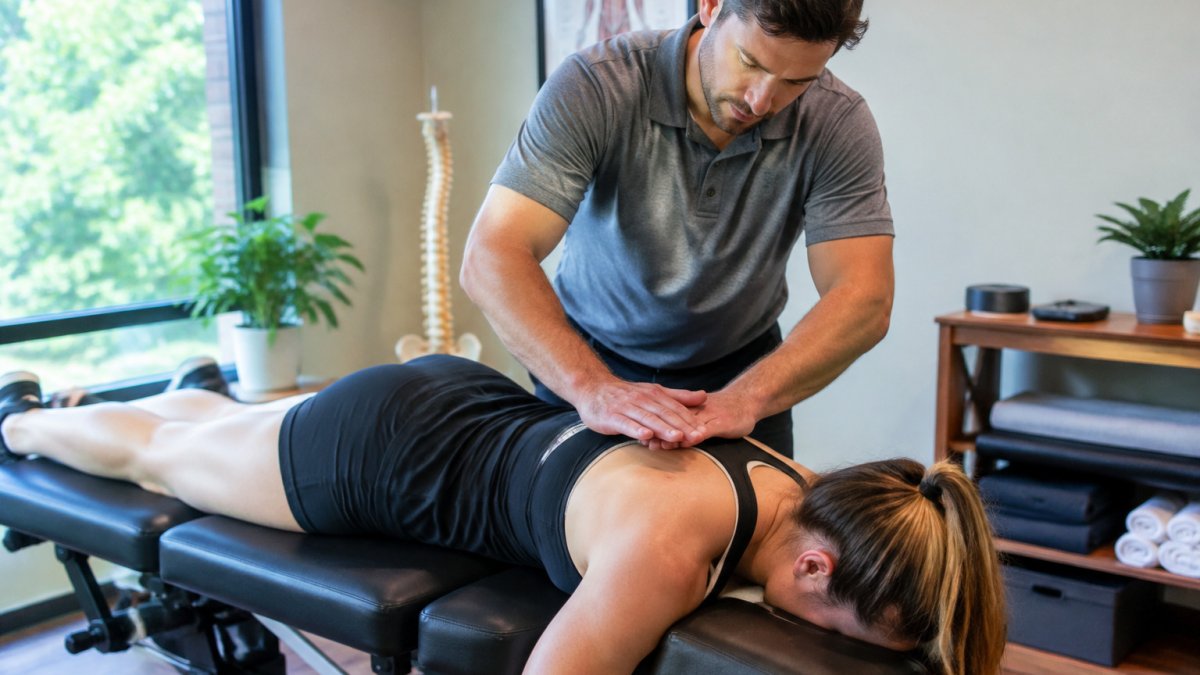
Request a spine evaluation when pain persists beyond a few weeks, keeps returning, or comes with any red flag. A thorough examination can assess factors that imaging alone may not show. Board-certified chiropractor Dr. Bialecki assesses spinal injuries, including those from car accidents.
If you are unsure whether to see a chiropractor or an orthopedic specialist, our comparison of chiropractor vs orthopedic care can help you decide. When you are ready, you can request an appointment or read how to book a spinal exam.
Lumbosacral strain usually heals with the right steps: early ice, safe medication, gentle movement, and a staged return. When pain lingers or red flags appear, expert care makes the difference. BialeckiChiropractic offers board-certified spinal care with advanced training in whiplash biomechanics and injury traumatology, plus detailed biomechanical analysis to find the cause. Get started with BialeckiChiropractic and build a recovery plan that protects your spine.
Frequently Asked Questions
How long does it take for a lumbosacral strain to heal?
Most acute cases improve noticeably within one to two weeks, and a review in StatPearls describes uncomplicated low back pain as typically resolving with activity as tolerated, appropriate analgesics, and physical therapy. Full recovery often takes four to six weeks, depending on severity and how consistently you follow a staged plan. If pain is not improving after two weeks, or worsens, see a clinician. A lumbosacral strain that keeps returning can point to weakness or biomechanical issues that need a proper evaluation.
Is walking good for a lower lumbar strain?
Yes, gentle walking is one of the safest ways to keep a strained back moving. Short walks of 5 to 10 minutes, several times a day, encourage blood flow to the injured muscles without loading them heavily. Start on flat ground and stop if pain radiates down the leg. Avoid long hikes, running, or walking on uneven terrain during the early phase. If walking makes symptoms worse, shorten the duration and speak with a clinician before pushing further.
What is the difference between a lumbar strain and a sprain?
A lumbar strain involves overstretching or tearing of muscles or tendons, while a low back sprain affects ligaments, the bands that connect bone to bone. Both cause acute low back pain and muscle spasm, and the early care is similar: relative rest, ice or heat, and a gradual return to movement. The distinction matters most for diagnosis and for how long recovery takes. A clinician can usually tell them apart through history and a physical exam.
When should I see a professional for a lumbosacral strain?
Seek care promptly if you have numbness in the groin, loss of bladder or bowel control, unexplained weight loss, fever, or pain that follows a fall or car accident. These are red flags that need urgent evaluation. Also book an appointment if pain lasts more than two weeks, keeps returning, or limits work and daily activity. A board-certified chiropractor can evaluate your condition and discuss an appropriate plan.


Comments