


How to Stop Muscle Guarding and Restore Comfortable Movement

Last Updated: November 15, 2026
Quick Summary
To stop muscle guarding, calm your nervous system first with slow breathing, gentle heat and small easy movement, then reintroduce motion gradually in small safe doses. Muscle guarding is a protective nervous system response, so pushing into it with aggressive stretching often makes the bracing worse.
Breathe in for four counts and out for six for two minutes to help muscles settle.
Apply a warm pack for 10 to 15 minutes to help guarded muscles settle.
Work just below your comfortable range rather than pushing to the edge.
A mild symptom increase that settles within an hour or two usually means you stayed safe.
Seek evaluation if guarding lasts more than a couple of weeks or blocks daily tasks.
Still bracing long after the injury healed?
We evaluate spine trauma and build care plans around your movement.
Table of Contents
What Muscle Guarding Is and Why It Happens
Muscle guarding is a protective response in which the nervous system keeps muscles braced around a painful or threatened area, limiting movement to prevent further harm.
The problem is that this protection often outlasts the threat.
The research backs this up. A 2019 review in the National Institutes of Health study on guarding, pain, and emotion found that guarding is motivated by fear or worry about movement, not by physical stiffness alone.
The crash is over, but the bracing can remain.
How Guarding Differs From Ordinary Stiffness
Ordinary stiffness eases as you warm up. Guarding does the opposite. Push into it and the body often tightens more, because the nervous system reads the stretch as a threat.
Here is how to tell them apart:
Sign | Ordinary Stiffness | Muscle Guarding |
Response to stretching | Loosens over time | Tightens or fights back |
Trigger | Disuse, cold, sleep position | Pain, fear, stress, injury memory |
Pattern | Predictable, fades with movement | Inconsistent, flares with stress |
Feel | Dull and heavy | Braced, on alert, protective |
Treating guarding like a tight hamstring is a common mistake, since stretching alone does not address a threat response.
Step 1: Calm the Nervous System Before You Stretch
Calming the nervous system first is the step most people skip, and it is the one that matters most. If the body is in a protective state, aggressive stretching can trigger more tension instead of release, according to CNN's 2025 reporting on stretching and muscle guarding.
Start here instead:
Breathe slowly. Inhale for four counts, exhale for six. Do this for two minutes.
Apply gentle heat. A warm pack for 10 to 15 minutes can help muscles settle.
Scan your body. Notice where you are bracing without meaning to. Shoulders, jaw, low back.
Move small. Slow, easy range of motion tells the brain that movement is safe.
Only after the body settles should you add any stretch. Even then, keep it gentle.
Step 2: Reintroduce Movement Gradually
Gradual reintroduction means adding motion in small, safe doses so the nervous system learns that movement will not cause harm. This is the core of graded activity and graded exposure, two approaches physical therapists use for persistent pain.

The man is American.
Set a Baseline Before You Progress
Before you add anything, find your current comfortable range. Move the area slowly until you feel the first hint of guarding or pain, then stop. That stopping point is your baseline for the day. Most practitioners find that working just below that line, rather than at it, produces steadier gains than pushing to the edge.
A simple progression looks like this:
Days 1 to 3: Gentle range of motion within comfort. No pushing. Two or three short sessions beat one long one.
Days 4 to 7: Add light active movement, like slow marches or shoulder rolls, and repeat each motion five to ten times.
Week 2: Introduce low-load strengthening with body weight or a light band, keeping reps well short of fatigue.
Week 3 and beyond: Build tolerance with functional movement that mirrors daily tasks, such as reaching overhead, sit-to-stand, or carrying a light load.
Use Symptom Response to Decide the Next Step
Track how you respond rather than how you feel in the moment. A common pattern is a mild increase in symptoms during movement that settles within an hour or two; that usually means you stayed in a safe range.
Watch out: pushing through a sharp increase in pain because a plan says it is time to progress is the most common way people re-trigger guarding and lose a week of progress.
Measure Progress With Simple Markers
You do not need equipment to judge whether the plan is working. Track three things in a notebook or phone note:
Comfortable range of motion: How far you can move before guarding kicks in, compared with last week.
Activity tolerance: How long you can sit, stand, walk, or work before symptoms build.
Recovery time: How quickly symptoms settle after activity.
Improvement usually shows up as a slightly larger comfortable range, a longer tolerance, or a faster recovery, not as a sudden disappearance of tightness. Expect changes over weeks rather than days, and expect good and bad days along the way.
Keep the Nervous System Calm Between Sessions
Between movement sessions, return to the calming steps from the previous section: slow breathing, gentle heat, and a quick body scan for bracing. The goal is to pair movement with a settled state so the nervous system stops treating motion as a threat. If a session leaves you braced and on alert, shorten the next one rather than abandoning movement altogether.
Muscle Guarding After Injury: Why the Body Keeps Bracing
Guarding after an injury is the body's way of protecting a healing area, and it often lingers well after the tissue has repaired.
That is why imaging can look normal while you still feel locked up. The tissue healed. The protective pattern stayed.
For readers recovering from a strain, a structured plan helps. Our guide on how to treat lumbosacral strain walks through a step-by-step recovery approach that pairs well with calming a guarding response.
Muscle Guarding and Anxiety: The Emotional Side of Tension
Anxiety and guarding are tightly linked, and treating one without the other rarely works. Experts note that because anxiety feeds chronic muscle guarding, addressing anxiety helps reduce pain, according to The Washington Post's 2024 coverage of anxiety and pain. (Source: clinical practice guidelines for physical therapy)
The mechanism is commonly described this way: the brain flags a movement as dangerous, the muscles brace, and the bracing can feel like proof that something is wrong, which may raise anxiety further.
Breaking that loop often means working with a clinician who understands the emotional side of tension. If that describes you, it helps to know how to find a trauma-informed chiropractor who screens for these factors rather than treating only the muscle.
How Long Does Muscle Guarding Last?
Muscle guarding may last days to weeks when the underlying trigger is addressed, but it can persist for longer if the nervous system stays on alert.
A 2024 neuromuscular down-regulation study involving 550 participants found that 96% experienced calming of hypertonic muscle guarding, which suggests the response is treatable when you target the nervous system directly (Rehab Mechanics 2024 neuromuscular study).
What tends to shorten it:
Early, gentle movement rather than rest
Stress and sleep management
Hands-on care that addresses the protective pattern
Realistic pacing instead of pushing through pain
What tends to prolong it: fear of movement, repeated aggressive stretching, and ignoring the stress that keeps the system braced.
Muscle Guarding Without Injury: Other Causes and Triggers
Guarding can appear with no injury at all. Stress, poor sleep, prolonged sitting, and old injury memories can all keep muscles braced. So can emotional strain, which is why some people notice tension in the neck and back during difficult weeks.
If there is no clear injury, the goal shifts to finding the root cause. Our breakdown of the steps to finding the root cause of back pain gives you a systematic way to work through the possibilities with a clinician.
Common triggers without injury include:
Sustained work postures
Anxiety and high stress
Guarding habits carried over from a past injury
Disrupted sleep
When to Seek Care and What to Expect at a Consultation
Most muscle guarding is not dangerous, but some symptoms need prompt assessment rather than self-management. The guidance below is general and does not replace an evaluation.
Seek Urgent Care for These Red Flags
Get evaluated promptly, or call emergency services, if guarding comes with any of the following:
New numbness, weakness, or loss of coordination in an arm or leg
Loss of bladder or bowel control, or numbness in the groin or saddle area
Pain after a fall, crash, or other significant trauma
Severe pain that is worsening rather than easing
Fever, unexplained weight loss, or pain that wakes you from sleep
Chest pain, shortness of breath, or pain that spreads down an arm
These signs can point to causes other than simple guarding, and they should not be worked through at home.
When Persistent Guarding Warrants Evaluation
Schedule a visit if guarding lasts more than a couple of weeks, keeps you from daily tasks, or keeps returning in the same area despite rest and gentle movement. Persistent guarding is worth evaluating because it can be hard to tell apart from other causes of stiffness on your own.
How to Tell Guarding From Other Causes of Stiffness
Guarding is a protective response, but stiffness can also come from joint problems, nerve irritation, inflammation, or tissue injury. A few patterns can help you describe what you are feeling to a clinician, though they are not a diagnosis:
Guarding tends to tighten when you push into it, flares with stress, and varies day to day.
Joint stiffness often feels worse after rest and eases with gentle movement.
Nerve-related symptoms may come with tingling, numbness, or pain that travels down a limb.
Inflammatory patterns often bring swelling, warmth, or morning stiffness that lasts more than an hour.
If you are unsure which pattern fits, that uncertainty is itself a reason to get assessed rather than self-treat.
What a Consultation Typically Involves
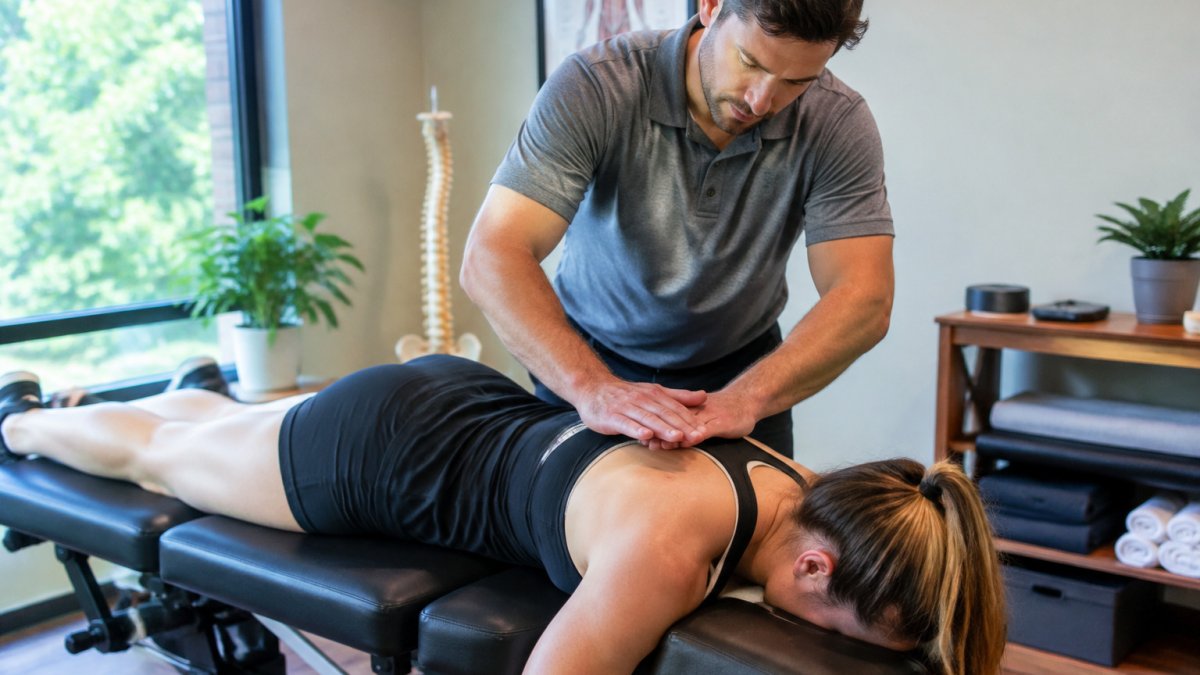
A good consultation starts with history and movement analysis, not just imaging.
From there, a plan takes shape. It usually combines calming strategies, graded movement, and attention to stress and sleep, with checkpoints to see whether symptoms are settling.
At BialeckiChiropractic, our board-certified chiropractor holds advanced certification in Whiplash Biomechanics and Injury Traumatology, and we build care around spinal biomechanics rather than guesswork. You can see how a chiropractic treatment plan for recovery is structured step by step, or request an appointment to get started.
This article is general information, not medical advice. Talk with a qualified clinician before starting any plan, especially after an injury.
Guarding rarely resolves on its own when the nervous system stays on alert.
Frequently Asked Questions
What can I do naturally to get rid of muscle guarding?
Start by calming the nervous system rather than forcing the muscle to release. Slow breathing, gentle warmth, and light range-of-motion movements signal safety to the body. Guarding is generally understood as a protective response motivated by fear or worry about movement, so aggressive stretching can backfire. Once tension settles, reintroduce movement gradually and track how your body responds. If guarding persists beyond a few weeks or comes with numbness, weakness, or worsening pain, have a qualified clinician assess it.
How long does muscle guarding last?
There is no single timeline. Acute guarding after a strain or accident often settles within days to a few weeks as tissue heals and confidence returns. Chronic guarding linked to ongoing pain or anxiety can persist for months without targeted care. Recovery depends on the cause, your activity tolerance, and whether the underlying threat response is addressed.
Can anxiety cause muscle guarding?
Yes. Guarding is often described as a behavioral response tied to fear, worry, and confidence in movement, not just physical damage. Anxiety can play a role in chronic muscle guarding, so addressing stress may help ease pain. Breathing work, graded activity, and stress management can all lower the threat response that keeps muscles braced.
When should I seek care for persistent muscle guarding?
See a qualified professional if guarding lasts more than two to three weeks, limits daily activities, or follows a motor vehicle accident or fall. Red flags include numbness, tingling, weakness, loss of bladder or bowel control, or pain that worsens despite rest. A clinician trained in spine and soft tissue injury can distinguish guarding from other causes of stiffness and build a plan matched to your body area and condition.


Comments