


How Do I Book an Appointment for a Spinal Exam?

Last Updated: November 1, 2026
Quick Summary
To book a spinal exam, choose whether to call the office or use online scheduling, then confirm if you are a new or existing patient, gather your records, and request a time. New patients should book earlier because longer evaluation blocks fill up, and you should confirm insurance and referral rules before committing.
Call the office for complicated symptoms such as pain after a crash or numbness and weakness.
New patient evaluations often require longer blocks, so availability may be tighter.
Referral rules are set by your health plan, not the specialist's title.
Bring prior imaging, a medication list, and a printed referral if one is required.
Symptoms after a car accident can appear days later, so do not wait to book.
Table of Contents
Book an Appointment for Spinal Exam: The Step-by-Step Process
Booking a spinal exam starts with one decision: call the office or use online scheduling. A disorganized booking can waste days, so it helps to work through this sequence before you call or book online. (Source: an estimated $200 billion is spent annually on managing back pain)
The stakes are higher than most people assume. An estimated $200 billion is spent annually on managing back pain in the United States, according to Low Back Pain: Evaluation and Management.
Below, we show you exactly how to book appointment for spinal exam without wasted calls, missing paperwork, or a surprise referral requirement.
By Phone or Online: Choosing Your Booking Route
Phone booking wins when your symptoms are complicated. Online scheduling wins when you know what you need and want a time slot confirmed today.
Call the office if any of these apply:
Your pain started after a crash or fall
You have numbness, tingling, or weakness in an arm or leg
You need to confirm insurance coverage before committing
Use online scheduling when your case is straightforward, you are an established patient, or you want to see appointment availability without waiting on hold. Before you book either way, check which plans the practice accepts so the visit does not become a billing surprise.
One practical note: office hours and appointment availability vary by practice, so confirm both before you arrange transportation or time off work.
New Patient vs. Existing Patient Pathways
New patients need more time, more paperwork, and often a longer first visit. Existing patients usually need less of everything.
If you are a new patient, expect to provide your medical history, insurance details, and the reason for your visit before your appointment time.
If you are an existing patient, the process is shorter. You typically need your name, date of birth, and a description of what changed since your last visit.
What Happens During a Spinal Exam
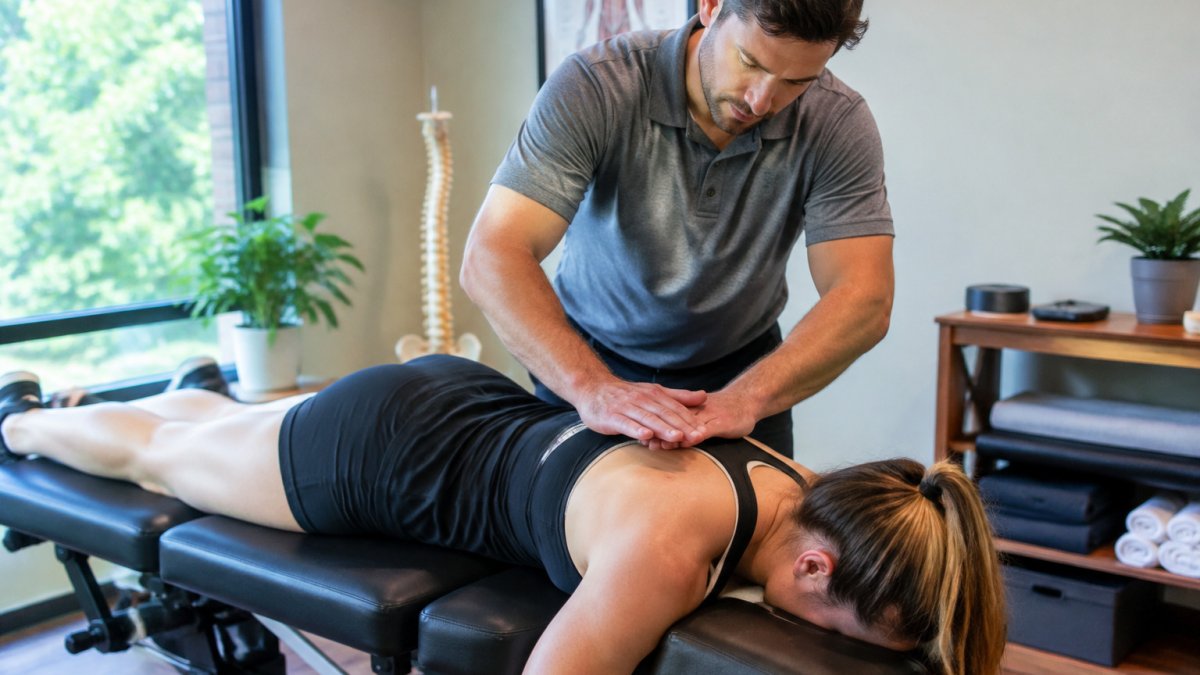
A spinal exam is a structured clinical assessment of your spine, nerves, and movement, not a single test. It combines your history, a physical exam, and neurological testing to identify what is actually driving your symptoms.

The visit usually follows a predictable order.
History, Physical Exam, and Neurological Testing
Physical examination. Your clinician observes posture, checks spinal alignment, and palpates areas of tenderness.
Neurological exam. This checks reflexes, sensation, and muscle strength to determine whether a nerve is involved.
Diagnostic imaging, when indicated. X-rays, MRI, or CT scans are ordered based on exam findings, not by default.
A chiropractor with training in spine trauma can bring a useful perspective to this process, particularly when a vehicle was involved in the injury.
Chiropractor vs Orthopedic for Spine: Which Specialist Fits Your Case?
The short answer: chiropractors lead with conservative, non-surgical care and biomechanical correction, while orthopedic specialists lead with surgical evaluation and advanced diagnostics.
Factor | Chiropractor | Orthopedic Specialist |
Primary approach | Conservative, hands-on care | Medical and surgical evaluation |
Typical first step | History, physical, neurological exam | Imaging, medical workup |
Best for | Mechanical pain, soft tissue injury, mobility loss | Structural damage, surgical candidates |
Referral needed | Usually no | Often yes, depending on insurance |
A common mistake is assuming a specialist visit means surgery. The Spine Health Foundation notes that specialist care can help identify appropriate tests and address problems without surgery.
For a deeper side-by-side breakdown, read our comparison of chiropractors and orthopedic specialists for spine care.
Do I Need a Referral for a Spine Specialist?
Referral rules are set by your health plan, not by the specialist's title, so the answer depends on which plan you carry and which clinician you are trying to see. The table below shows the common patterns; confirm your specific plan before you book.
Plan type | Chiropractor | Orthopedic or spine specialist |
HMO | Often requires a referral | Usually requires a referral |
PPO | Usually no referral | Often no referral, but in-network rules apply |
EPO | Usually no referral | Usually no referral, in-network only |
POS | Often requires a referral | Often requires a referral |
Medicare Advantage | Varies by plan | Varies by plan |
Traditional Medicare | Generally covered for chiropractic manipulation | Generally covered when medically necessary |
These are common patterns, not guarantees. Plan documents control, and two plans with the same label can have different rules.
How to Confirm Your Referral Requirement
Call the member services number on the back of your insurance card and ask three questions:
Does this plan require a referral for chiropractic care?
Does it require a referral for an orthopedic or spine specialist consult?
Is the specific practice or clinician in network?
Write down the representative's name and the date of the call. If a claim is later denied for a missing referral, that record is your first line of appeal.
How to Get a Referral Quickly
If a referral is required, request it from your primary care physician. Ask the front desk to send it directly to the specialist's office and to give you a copy.
A common pattern is that referrals take one to three business days to process. If your symptoms are worsening, tell the primary care office that the referral is urgent; many practices can expedite when the clinical picture warrants it.
Pro Tip Bring a printed copy of your referral to the appointment even if the office says it received it electronically. Records get lost, and a paper copy prevents a same-day reschedule.
What the Visit May Cost
Cost depends on your plan's deductible, copay, and coinsurance, and on whether the visit is billed as a new patient exam, an established patient visit, or a procedure. Before you book, ask the practice's billing office for a good-faith estimate of what you will owe for the appointment type you are scheduling.
If you are paying cash, ask whether the practice offers a self-pay rate and whether that rate differs from the insurance-billed amount. The answer varies by practice, and asking costs nothing.
When a Referral Is Not the Right First Step
If you have no primary care physician and your plan does not require a referral, you can often book directly with a chiropractor or an in-network spine specialist. If your plan does require one and you cannot get in to see a primary care physician quickly, call the specialist's office and ask whether they can help route the referral or recommend a primary care practice with open availability.
For a deeper side-by-side breakdown of which clinician to see first, read our comparison of chiropractors and orthopedic specialists for spine care.
What to Bring to a Spine Appointment
Preparation is the difference between a rushed check-in and a full exam. Bring the items below, and complete the paperwork before you arrive if the practice allows it.
The Core Checklist
Photo identification. A driver's license or state ID.
Insurance card. Front and back, plus a secondary card if you have one.
Medication list. Every prescription, over-the-counter drug, and supplement, with dose and frequency. Include blood thinners, muscle relaxants, and pain medications; each affects clinical decisions.
How to Request Prior Imaging
Call the imaging center or hospital where the scan was performed and ask for the images and the radiology report. Most facilities release them to the patient on request, often within a few business days, and many provide a patient portal download.
Prior imaging is the item patients most often forget. Bringing prior imaging can help your clinician avoid ordering scans you have already had.
Paperwork and Check-In
Complete new patient forms in advance when the practice offers them online. You can find the patient info form on the practice's website. Many practices offer new patient forms in advance; ask the office whether this is available before you arrive.
Arrive 15 minutes early for a first visit and 5 to 10 minutes early for a follow-up. Bring a list of your current providers so the office can request records directly if needed.
Watch Out If you take a blood thinner, tell the front desk when you book. Some hands-on techniques require precautions, and the clinician may want to adjust the plan.
What to Wear and How to Prepare
Wear loose clothing you can move in, and bring or wear shorts if you may need a lower-back exam. Avoid heavy meals right before the visit if you are prone to nausea during movement testing. If you have a driver, arrange for them to wait nearby; some exams include brief balance or strength testing that can leave you feeling unsteady.
Questions Worth Asking
What is the working diagnosis, and what findings support it?
Which imaging, if any, is indicated, and why now?
What are the treatment options, and what are the trade-offs of each?
What should prompt a call back before the next visit?
Write the answers down during the visit. Notes can help you remember instructions and follow the plan at home.
Spinal Exam After a Car Accident: Why Timing Matters
Symptoms after a crash often appear days later, not hours. That delay is normal and it is exactly why you should not wait for pain to become severe before booking.
Whiplash and soft tissue injuries can produce stiffness and headaches hours or days after impact.
Timing affects two things: your recovery and your claim. Early evaluation creates a clear record linking your symptoms to the crash. Waiting weeks creates gaps that are harder to explain later.
If your symptoms appeared days after the collision, our guidance on neck pain days after a car accident covers what to do next.
Request Your Spinal Exam at Bialecki Chiropractic
You have the process. Now the only step left is the appointment itself.
Bialecki Chiropractic specializes in spine trauma and rehabilitation, with a focus on injuries from motor vehicle accidents. The practice is led by a board-certified chiropractor with advanced certification in Whiplash Biomechanics & Injury Traumatology, and it provides spinal evaluations for injuries including those from motor vehicle accidents.
Frequently Asked Questions
How do I book an appointment for a spinal exam?
Call the clinic directly or use the online appointment request form on its website. Have your insurance card, a list of current medications, and a short description of your symptoms ready. If your pain started after a car accident, say so when you book so the scheduler reserves enough time for a trauma-focused spinal exam. Most offices confirm your appointment time by phone or email within one business day.
Do I need a referral to see a spine specialist?
In most cases, no. Many chiropractic and orthopedic practices accept patients without a referral, though some insurance plans, especially HMOs, require one before covering specialist care. Check your plan's rules or call the member services number on your insurance card. If a referral is required, your primary care doctor can usually issue it after a brief visit.
What should I bring to my first spinal exam?
Bring a photo ID, your insurance card, and any imaging reports or X-rays, MRIs, or CT scans you already have, including the discs if available. List your medications, prior surgeries, and family history of spine conditions. Wear loose clothing you can move in. If your pain followed a car accident, bring the crash date, the claim number, and your auto insurer's contact information.
Can I book a spinal exam after a car accident even if I feel fine?
Yes. Symptoms from whiplash and soft tissue injuries often appear hours or days after the crash, and a spinal exam can document range of motion, tenderness, and neurological function while the findings are fresh. Call the office, describe the accident, and ask for the first available appointment.
Back pain rarely resolves on its own when the underlying mechanics are wrong. Get an evaluation that identifies the cause instead of masking it. Get started with Bialecki Chiropractic and request your appointment today.


Comments